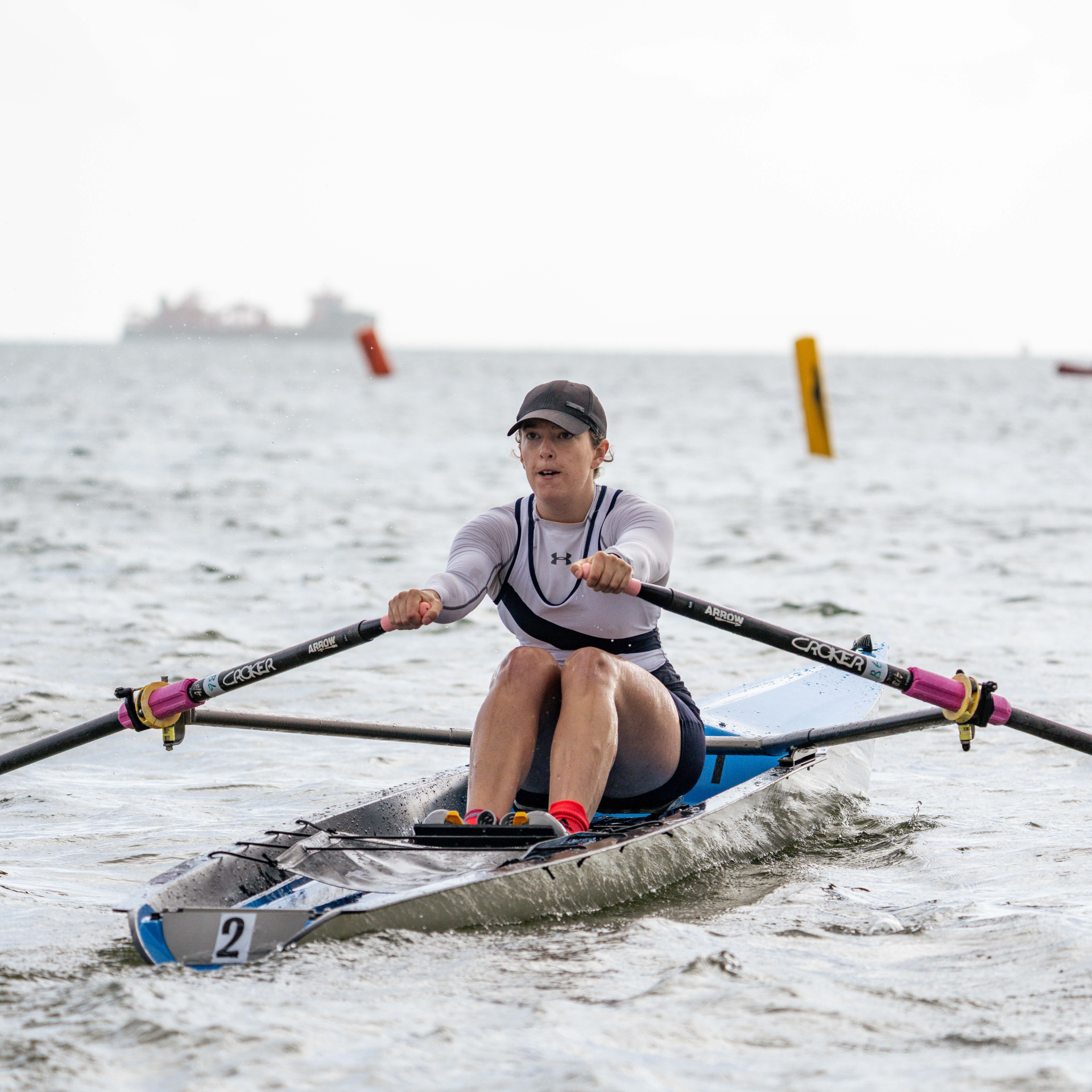
When you feel your best as a whole person, you perform your best as an athlete.
You are not just an athlete. You’re a person, with a body, a mind, relationships, worries, and a life beyond the results sheet. All of that comes with you to training and to competition.
Performance isn’t something to fix in isolation. When you feel well, grounded and like yourself, you have more to draw on when it matters. When you’re stretched thin, disconnected from your body, or tying your worth to your last result, performance often suffers.
My work is built on that idea: looking after the whole person is not a distraction from performance. It’s the foundation.

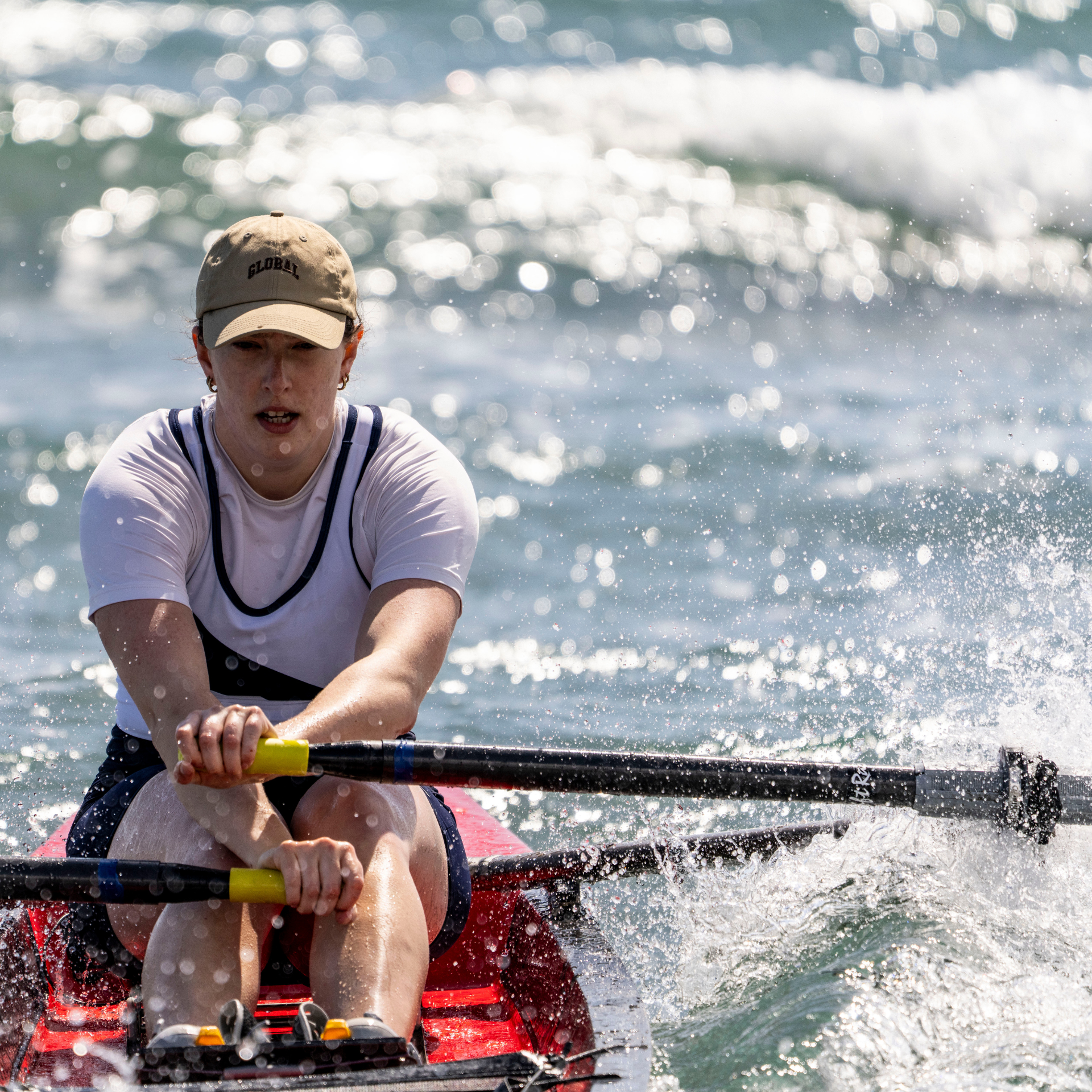
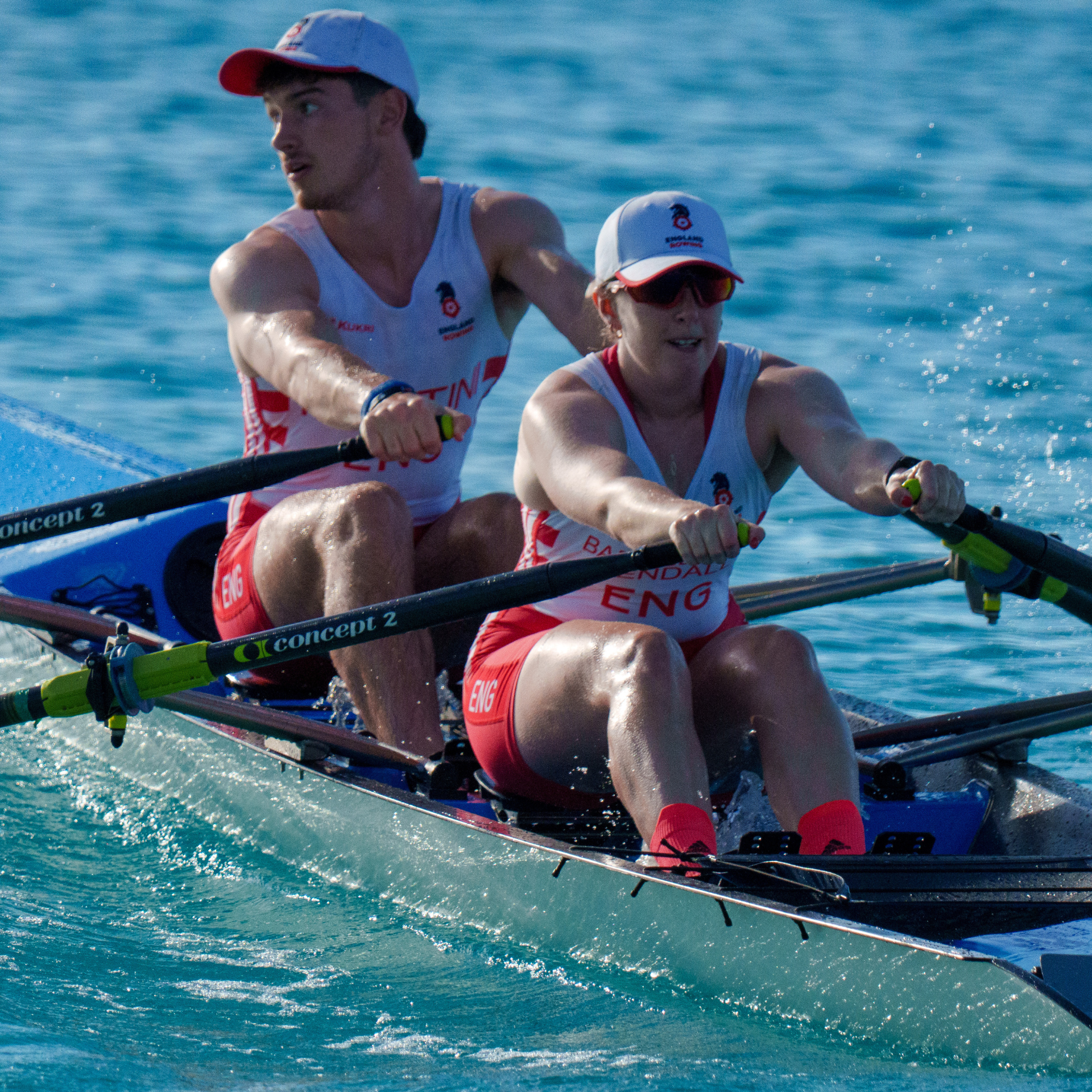
Hi, I’m Éva!
I’m a Sports & Exercise Psychologist in Training. I’m completing my SEPAR qualification and work under regular supervision, which keeps my practice reflective, ethical and grounded.
I’m also an athlete, and that shapes how I work.
I started rowing at university with Olympic ambitions and gave it everything I had, until I burned out, physically and mentally. I almost quit the sport altogether. I had to step back from the goals I’d built my identity around, and I didn’t know who I was without them.
That experience is what led me into sport psychology. I wanted to understand what had happened to me, and to learn how to support other athletes going through something similar.
Along the way, I found my way back to rowing through coastal and beach sprint, on my own terms. I now compete at a high level, hold national and international medals, and have represented England and Great Britain. Most importantly, I’m enjoying it more than ever.
So when you tell me about the pressure, the doubt or the exhaustion, I’m not working from a textbook alone. I know what it’s like to be the athlete too.

If you’re interested in the technical stuff…
Here’s what my approach looks like in more detail. If you’d rather skip to the practical side, you can head straight to 1-to-1 sessions or workshops and book a free intro call.
Person-centred: you’re the expert on you
The person-centred approach comes from the work of Carl Rogers. It starts with a simple idea: you already hold a great deal of insight into your own experience, and given the right conditions, you can find your own way forward.
In practice, that means I don’t arrive with a fixed programme or a list of things you “should” be doing. Instead, I aim to offer:
Genuine listening. I try to understand your experience as you see it, not as I think it ought to be.
Acceptance without judgement. You don’t need to perform, impress or have things figured out in the room.
Honesty. I’ll be real with you, and we’ll explore together what’s been holding you back.
Somatic: your body is part of the picture
Many athletes know what they “should” think but still feel their body respond differently: tight shoulders, racing heart, a stomach that won’t settle, or a flat, heavy feeling before an important race. Sometimes performance issues hit the body after that important race, showing up as the post-race blues or feeling completely drained and unmotivated.
A somatic approach takes your body’s signals seriously, as information rather than as a problem. We might work with:
Interoception: noticing what’s happening inside your body, such as heartbeat, breath and tension, and what those signals mean for you
Your window of tolerance: recognising when you’re tipping into overwhelm or shutting down, and learning what helps you come back
Breath and grounding: practical tools you can use before, during and after training or competition
Body awareness in performance: noticing the difference between feeling ready, feeling flat, and feeling overwhelmed
How my approach is different
Many approaches to sport psychology focus mainly on techniques: visualisation scripts, self-talk, goal setting. These can be useful, and I use them where they fit. But they work best when they’re built on a real understanding of you, rather than applied to everyone in the same way.
What I offer differently:
We start with you, not a template. What we work on is shaped by your experience, your sport and what you actually need.
We work with the body as well as the mind. You learn to notice and work with your physical responses, not just override them.
We look beyond results. Identity, wellbeing and life outside sport are part of the conversation, because they affect how you perform.
We build understanding, not dependency. The aim is for you to leave with tools and self-knowledge that last, not to rely on me.
How my approach helps athletes
Everyone’s different, and I won’t promise specific outcomes. But athletes often describe:
Feeling more settled in their body around competition
A calmer relationship with pressure, nerves and mistakes
A clearer sense of what’s in their control
Greater confidence in their own judgement
Feeling more like themselves, both in sport and out of it
Work with me
Whether you’re a club athlete or competing internationally, and whatever your sport, you’re welcome here.